Email Us
FAQs

FAQs

How to choose a slurry pump suitable for flotation process?

Selecting a Suitable Slurry Pump for the Flotation Process

Selecting a slurry pump apt for the flotation process demands a comprehensive evaluation of multiple factors. Here are some guidelines:

I. Fundamental Parameters

A. Flow Rate

Determination Rationale: The flow rate of the slurry pump should be ascertained in accordance with the slurry conveyance requirements within the flotation process. It is crucial to ensure that the pump can deliver an adequate volume of slurry per unit time to satisfy the production process needs. This typically involves taking into account the processing capacity of the flotation operation and the slurry flow rate requisites for subsequent operations, such as the transportation of concentrates and the discharge of tailings.


B. Head

Selection Criteria: Based on the height to which the slurry must be lifted during the flotation process, along with pipeline resistance and any other potential pressure losses, a slurry pump with an appropriate head should be chosen. This ensures that the slurry can be smoothly transported to the designated location.


II. Solid - Liquid Characteristics

A. Solid Particle Content and Particle Size

Impact on Pump Selection: Understanding the content and particle size distribution of solid particles in the slurry is of great significance. In cases where the solid particle content is high and the particle size is large, it becomes essential to select a slurry pump with flow components, such as impellers and pump casings, fabricated from high-hardness wear-resistant materials. This choice helps prevent excessive wear and extends the service life of the slurry pump. Conversely, for slurries with finer particles, a slurry pump with relatively moderate wear - resistance can be selected, depending on the actual circumstances.


B. Slurry Density

Pump Power Considerations: When the slurry density is high, the load on the slurry pump increases. Therefore, a slurry pump with sufficient power and the ability to withstand high pressure should be selected to ensure the normal transportation of the slurry. On the other hand, for slurries with lower density, although the power requirement for the pump is relatively lower, it is still necessary to ensure that the pump's performance can meet the process requirements.


C. Acidity (pH Value)

l Anti-Corrosion Measures: If the pH value of the slurry is acidic or alkaline, a slurry pump constructed from materials with excellent corrosion-resistance should be selected. Alternatively, special anti-corrosion treatments can be applied to the flow components of the slurry pump to safeguard against corrosion by the slurry.


III. Characteristics of the Flotation Process

A. Influence of Flotation Reagents

Reagent-Induced Effects on Pump Selection: Some flotation reagents may impose specific requirements on the material of the slurry pump. Additionally, they may alter the properties of the slurry, such as its viscosity, which in turn impacts pump selection. For instance, if certain reagents increase the slurry's viscosity, a slurry pump capable of adapting to the transportation of high-viscosity slurry must be chosen. This may involve considering aspects like the pump's impeller design and power to ensure there is sufficient power to drive the high-viscosity slurry.


B. Foam Content of Concentrate

Specialized Pump for Foamy Concentrates: If the foam content in the concentrate following flotation is high, it may be necessary to contemplate using a dedicated foam slurry pump. These pumps are specially designed in structure and are better equipped to handle slurries containing a large amount of foam. This helps avoid the adverse effects of foam on pump operation, such as cavitation and blockage.

How to choose a suitable flue gas desulfurization (FGD) pump according to the desulfurization process?

Selecting an Appropriate Flue Gas Desulfurization (FGD) Pump Based on the Desulfurization Process

When it comes to choosing a suitable desulfurization pump in accordance with the desulfurization process, the following aspects merit careful consideration:

I. Comprehending the Characteristics of Diverse Desulfurization Processes

A. Limestone - Gypsum Wet Desulfurization

1. Process Features: This is a highly mature technology renowned for its high desulfurization efficiency, making it particularly suitable for large-scale power plants.

2. Pump Requirements: Given the nature of the process, pumps with excellent wear-resistance and corrosion-resistance are essential. High-chromium alloy pumps are a common choice. These pumps must possess a robust conveying capacity to handle the large volumes of slurry involved in the process. Additionally, they need to have effective anti-clogging capabilities to ensure continuous and smooth operation.


B. Ammonia Desulfurization

1. Process Features: One of the advantages of this process is that its by-product, ammonium sulfate, can be utilized as a raw material for fertilizers, offering economic benefits. However, both ammonia and ammonium sulfate solutions are corrosive.

2. Pump Requirements: The desulfurization pump used in this process must be made of corrosion-resistant materials. Moreover, it should have an outstanding sealing performance to prevent the leakage of ammonia, which is not only harmful to the environment but also poses risks to the equipment and personnel.


C. Magnesium Desulfurization

1. Process Features: This process is characterized by a rapid reaction speed and high efficiency. Nevertheless, it incurs a relatively high cost, and the subsequent processing of magnesium sulfite and magnesium sulfate is necessary.

2. Pump Requirements: Pumps for magnesium desulfurization must be corrosion-resistant. Additionally, the selection of an appropriate pump model is crucial to guarantee the stable delivery of the slurry throughout the process.


II. Taking into Account the Performance Parameters of the Desulfurization Pump

A. Flow Rate and Head

1. Determination Based on System Requirements: In line with the design specifications of the desulfurization system, it is essential to accurately determine the required flow rate and head. The flow rate should be sufficient to meet the circulation and delivery volume demands of the slurry within the system. Meanwhile, the head must be capable of overcoming the pipeline resistance and the pressure losses in various equipment.

2. Consideration of System Variations: Given the potential for operating changes within the system, it is advisable to select a desulfurization pump that has a certain adjustable range in terms of flow rate and head. This flexibility enables the pump to adapt to different working conditions and maintain optimal performance.


B. Efficiency and Power

1. Efficiency for Cost-Savings: Opting for a high-efficiency desulfurization pump is a key strategy for reducing long-term operating costs. High-efficiency pumps consume less power while delivering the same flow rate and head, resulting in significant energy savings over time.

2. Proper Motor Power Selection: According to the power requirements of the system, the motor power of the desulfurization pump should be carefully selected. It is vital that the motor power matches the actual operating power of the pump. If the motor power is too large, it will not only increase equipment costs but also lead to higher energy consumption. Conversely, if the motor power is too small, the pump may not be able to function properly, potentially causing system failures.


III. Paying Attention to the Material and Structure of the Slurry Pump

A. Material Selection

1. Corrosion and Abrasion Resistance: Since the desulfurization slurry is both corrosive and abrasive, the choice of material for the desulfurization pump is of utmost importance. Common corrosion-resistant materials include stainless steel, duplex stainless steel, and high-alloy cast iron. In scenarios where wear is particularly severe, pumps lined with wear-resistant materials such as rubber or ceramics can be considered. In high-temperature flue gas desulfurization systems, the material's ability to withstand high temperatures must also be factored in.


B. Structural Design

1. Anti-clogging Design for Solid-Laden Slurries: For desulfurization slurries that contain solid particles, the pump's structure should be designed with good anti-clogging performance in mind. Pumps with larger flow channels and non-clogging designs, such as open-impeller pumps or spiral centrifugal pumps, are often preferred. These designs help to prevent the accumulation and blockage of solid particles, ensuring the continuous and efficient operation of the desulfurization pump.

How to choose the right matching slurry pump for sand washing machine?

Selecting the Appropriate Slurry Pump for a Sand-Washing Machine


1. Determining the Flow Requirements of the Sand-Washing Machine

The initial step is to accurately ascertain the slurry flow rate necessary for the sand-washing machine to operate normally. Different types and specifications of sand-washing machines demand distinct flow rates. This information can typically be obtained from the equipment's technical documentation or by analyzing the processing capacity and operational characteristics of the sand-washing machine. Once the required flow rate is known, it serves as a crucial parameter for choosing the appropriate feed pump for the sand-washing machine.


2. Opting for a Slurry Pump with Suitable Flow

The rated flow of the slurry pump should be well-matched with the flow requirements of the sand-washing machine. It is advisable to have a certain buffer in the flow rate. As a general rule, the rated flow of the slurry pump should be set 10% - 20% higher than the maximum flow demand of the sand-washing machine. This extra margin accounts for various scenarios. For instance, when the sand-washing machine is processing raw materials with diverse particle sizes and sand contents, the flow rate may vary. Additionally, in special working conditions like briefly accelerating the sand-washing speed, the pump can still supply an adequate amount of slurry without performance degradation.


3. Taking into Account the Layout and Resistance of the Sand-Washing System

The relative position of the sand-washing machine in relation to the slurry source, specifically the height difference, plays a significant role. Moreover, factors such as the length of the slurry-conveying pipeline, the number of elbows, and the presence of valves all impact the head required for the slurry to reach the sand-washing machine. If the sand-washing machine is installed at an elevated location or if the pipeline system is intricate with numerous bends and valves, resulting in high resistance, a higher-head slurry pump is essential to ensure the smooth flow of slurry into the sand-washing machine.


4. Calculating and Determining the Appropriate Head

Based on the actual height difference and the resistance within the pipeline system, hydraulic calculations are carried out to estimate the required head. The rated head of the selected slurry pump should be slightly greater than the calculated value. A common practice is to add a margin of approximately 5% - 10%. This additional head compensates for potential increases in resistance over time, such as those caused by pipeline wear, the accumulation of scale, or other factors that may impede the flow of slurry.


5. Considering Sand Size and Concentration

The size and concentration of sand in the slurry being processed by the sand-washing machine are critical considerations. In cases where the sand particles are large, a slurry pump with specific design features is needed. For example, pumps equipped with open or semi-open impellers are more suitable as they can effectively transport large particles, minimizing the risk of impeller clogging. When dealing with high-concentration slurry, the flow-through components of the slurry pump must exhibit excellent wear resistance. High-chromium alloy materials are often used to fabricate impellers, pump casings, and guard plates to withstand the abrasive forces exerted by the concentrated slurry.


6. Addressing the Corrosiveness of the Slurry

If chemicals are involved in the sand-washing process or if the water contains corrosive substances, the flow-through parts of the slurry pump must be constructed from corrosion-resistant materials. For example, when an acidic cleaning agent is added to the sand-washing water, stainless-steel or rubber-lined slurry pumps are viable options. These materials protect the pump's components from corrosion, thereby extending the pump's service life and ensuring reliable operation.


7. Focusing on the Efficiency Curve of the Slurry Pump

Different models of slurry pumps exhibit varying levels of efficiency at different flow rates and heads. During the selection process, it is essential to examine the pump's efficiency curve. The goal is to choose a slurry pump that demonstrates high efficiency in the vicinity of the operating point corresponding to the working flow rate and head of the sand-washing machine. By doing so, energy consumption can be reduced, leading to enhanced economic performance of the entire sand-washing system.

How to enhancing the Reliability of Slurry Pumps through Appropriate Sealing Solutions?

In mining operations, mining operators can boost productivity and profitability by carefully overseeing the sealing solutions applied in the slurry pump cover area. slurry pumps are fundamental to mining activities. They effectively convey ore in slurry form throughout the mining site. However, in numerous factories, slurry pumps frequently rank among the components most likely to fail. The abrasive characteristic of the slurry can cause severe damage to the pump components.

The capping area is especially vulnerable to pressure. It employs mechanical seals or packing to prevent leakage. Inadequate quality or inappropriate sealing solutions for the present applications can substantially raise maintenance demands and result in unplanned shutdowns as well as excessive water consumption. Mining operators aiming to enhance the efficiency of slurry pumps (and thereby overall operational efficiency) ought to invest time in analyzing the slurry and select customized sealing solutions capable of withstanding the inherent pressure.

When analyzing the slurry, several factors need to be considered. These include the hardness and abrasiveness of the slurry, the quantity and weight of the solid particles it carries, and the salinity, chemical composition, and temperature of the slurry. These factors will exert a significant influence on component wear. Equipped with this information, operators can more astutely select the functions required for sealing solutions, whether they are mechanical seals or packing seals. Although the acceptance of mechanical seals differs in various mining environments, compared to packing seals, mechanical seals can extend maintenance intervals by up to four times.

Nevertheless, the training requirements for maintenance personnel are slightly more stringent.


Selecting Appropriate Seals and Fillers

Considerations for Choosing Mechanical Seals

What factors should be taken into account when choosing a mechanical seal? High-quality seals should feature a fixed spring design, be equipped with anti-blocking springs and micro-polished dynamic O-ring surfaces. Moreover, anti-corrosion functions should be added flexibly. For instance, in applications where the slurry has strong wear properties, polyurethane can be incorporated.

Additionally, high-quality mechanical seals should possess sufficient flexibility to incorporate support functions (such as quenching/draining and flushing) to prolong their service life. They should have a wire-to-wire sealing surface, a large cross-sectional area, and a robust drive mechanism that can be installed on hardened pump sleeves.


Requirements for Fillers

To use fillers, the yarn must be robust enough to prevent slurry from infiltrating the fibers. The weaving pattern of the yarn should be able to create a tortuous leakage path. Fillers need to have low friction to cut down on energy consumption and minimize damage to the rotating shaft in the presence of slurry. The packing should also have sufficient flexibility to convert axial energy into radial load and maintain effective sealing over an extended period. This reduces the number of adjustments needed for the driven components during the packing's service life.

In conclusion, slurry pumps are of vital importance in mining operations. By examining the operating conditions and requirements and choosing suitable sealing solutions, the normal operating time of the pump can be lengthened, water consumption can be decreased, and high productivity can be sustained.

How to match a cyclone with a slurry pump?

The process of matching a slurry pump with a cyclone demands careful consideration of multiple factors, such as cyclone parameters, material characteristics, and the layout of the pipeline system. Based on these elements, an appropriate slurry pump with suitable flow parameters can be chosen.


1. Determining Cyclone Parameters

Processing Capacity

It is crucial to clearly define the design processing capacity of the cyclone, as this serves as the fundamental basis for slurry pump selection. One can typically refer to the product manual or the technical parameter table of the cyclone. For instance, a cyclone with a diameter of 400mm might have a processing capacity in the range of approximately 100 - 200 cubic meters per hour.


Working Pressure

Cyclones of different types and specifications have varying requirements for inlet pressure, generally falling within the range of 0.05 - 0.3MPa. This pressure must be supplied by the head of the slurry pump.


Particle Characteristics

An in-depth understanding of the content, size, and hardness of solid particles in the medium being treated by the cyclone is essential. In cases where the particle content is high, the particle size is large, or the hardness is substantial, the slurry pump should possess superior passing capabilities and wear resistance.


2. Selecting a Slurry Pump

Flow Matching

The rated flow of the slurry pump should be marginally larger than the processing capacity of the cyclone to account for flow fluctuations or system losses. As a general recommendation, the pump's flow rate should be 10% - 20% higher than the cyclone's processing capacity. For example, if the cyclone has a processing capacity of 100 cubic meters per hour, the rated flow rate of the slurry pump can be selected to be between 110 - 120 cubic meters per hour.


Lift Matching

Calculate the required slurry pump head by taking into account the working pressure requirements of the cyclone and the pipeline resistance loss. It is necessary to ensure that the slurry pump head can overcome the pipeline resistance from the pump outlet to the cyclone inlet, the pressure required at the cyclone inlet, and the height difference between the two points.


Material Selection

The material of the slurry pump should be selected in accordance with the characteristics of the medium. In the case of corrosive media, such as acidic or alkaline wastewater, pumps made of corrosion-resistant materials like stainless steel, fluorine-lined materials, or ceramic can be chosen. For highly abrasive media, slurry pumps made of wear-resistant materials such as high-chromium alloys are necessary.


Performance Curve

Slurry pumps with steep performance curves are more conducive to operation in conjunction with cyclones. When the system flow changes due to variations in the selected materials or the qualified media, the cyclone inlet pressure can experience only minor fluctuations. This helps to ensure the stability of the flow state within the cyclone.


3. Considering the Pipeline System

Pipeline Layout

The pipeline direction from the slurry pump to the cyclone should be rationally planned. Minimize the use of elbows, tees, and other pipe fittings to reduce pipeline resistance losses. Additionally, the pipeline should be installed with a certain slope to facilitate the flow and emptying of the medium.


Pipe Diameter Selection

Select an appropriate pipe diameter based on the flow rate of the slurry pump and the medium flow rate requirements. A pipe diameter that is too large may lead to an overly low flow rate, causing solid particles to settle. Conversely, a pipe diameter that is too small will increase pipeline resistance, thereby affecting the performance of the pump and the feed pressure of the cyclone.


4. System Debugging and Optimization

Installation and Connection

Install the slurry pump and cyclone correctly in accordance with the equipment installation instructions. Ensure that the pipe connection between the two is secure and well - sealed to prevent leakage.


Trial Operation and Adjustment

During the system trial-operation phase, closely monitor the operating status of the slurry pump and the hydrocyclone. This includes observing parameters such as the pump pressure, flow, motor current, and the separation effect of the hydrocyclone. Based on the actual situation, adjust the speed of the slurry pump, valve opening, and other factors to enable the system to reach its optimal operating state.

How to reduce the energy consumption of slurry pumps?

Strategies to Reduce the Energy Consumption of Slurry Pumps

Slurry pumps, featuring a simple structure, high unit efficiency, low noise levels, safe and reliable operation, as well as convenient installation and maintenance, find extensive applications across diverse industries. Here are some methods to reduce the energy consumption of slurry pumps:


1. Ensuring Alignment between the Pressure Chamber and the Impeller

When the axis of the pressure chamber and the impeller of a slurry pump has a deviation of 2 mm or an angular difference greater than 2 degrees, the pump's water output can decrease by 5% - 6%. During maintenance, it is crucial to meticulously measure and precisely identify the position where the axes coincide, and then firmly install the components. By doing so, the energy consumption of the pump during operation, whether in terms of oil consumption for oil-lubricated pumps or power consumption for electrically-driven ones, can be reduced by 6% - 7%. This alignment is essential as any misalignment disrupts the smooth flow of the slurry through the pump, causing inefficiencies and increased energy demands.


2. Controlling the Sealing Ring Gap

Tests have shown that when the gap in the impeller radius direction increases by 4 mm, the water output of the slurry pump decreases by 10%. To address this, during maintenance, one can use organic adhesives and asbestos wire to restore the gap to the factory-specified dimensions. This restoration can lead to a reduction in the pump's oil or power consumption during operation by 10% - 12%. A proper sealing ring gap is vital for maintaining the pump's hydraulic efficiency. An excessive gap allows for leakage, which in turn requires the pump to work harder to achieve the desired flow rate, thus consuming more energy.


3. Smoothing the Pump and Volute Surfaces

Rust and unevenness on the surface of the slurry pump and the inner surface of the water pressure chamber (also known as the volute) can cause a 7% - 8% reduction in the pumping water volume. During maintenance, using a steel brush, iron sandpaper, or a grinding wheel to polish these surfaces smooth can reduce the pump's fuel or power consumption during operation by 9% - 14%. A smooth surface reduces the frictional resistance that the slurry encounters as it passes through the pump. With less resistance, the pump can operate more efficiently, consuming less energy to move the same volume of slurry.

How to select a slurry pump according to the concentration and particle size of the slurry?

When it comes to choosing a slurry pump in accordance with the concentration and particle size of the slurry, the following considerations are essential:


Slurry Concentration

Low-Concentration Slurry (<10%)

  • For low-concentration slurries, an ordinary centrifugal slurry pump is a viable option. Its straightforward structure and high efficiency make it capable of fulfilling the transportation needs of such slurries.

  • In cases where the slurry is corrosive, a centrifugal pump crafted from stainless steel, like 304 stainless steel or 316L stainless steel, can be employed. This choice enhances the pump's corrosion resistance.


Medium - Concentration Slurry (10% - 30%)

  • Generally, a slurry pump equipped with a semi-open impeller, such as the ZJ Slurry Pump, is utilized. The semi-open impeller features a broader flow channel. This allows a certain quantity of solid particles to pass through, reducing the likelihood of clogging. It also offers good wear resistance and efficiency.

  • For highly abrasive slurries, a slurry pump with an impeller and pump casing fabricated from wear-resistant materials, such as high-chromium cast iron, can be selected. This helps to prolong the equipment's service life.


High-Concentration Slurry (>30%)

  • Usually, it is necessary to opt for a slurry pump with an open impeller, for example, the FSP Vertical Slurry Pump. The open-impeller structure enables the slurry pump to convey large particles and high-concentration slurries without getting clogged.

  • To enhance the slurry pump's wear and corrosion resistance, the flow-through components can be made from wear-resistant and corrosion-resistant materials like rubber and polyurethane. Alternatively, a wear-resistant coating can be sprayed onto the metal surface.


Particle Size

Fine-Particle Slurry (<0.1mm)

  • A slurry pump with a smaller impeller gap, such as some small vertical slurry pumps, can be chosen. Since the particles are fine, the wear on the pump is relatively minimal, and the smaller impeller gap aids in enhancing the pump's efficiency and head.

  • For the transportation of fine-particle slurry with stringent precision requirements, a positive displacement pump, like a screw pump, can be selected. This type of pump can achieve more stable and accurate transportation.


Medium - Particle Slurry (0.1mm - 1mm)

  • Centrifugal slurry pumps, such as the FAH slurry pump, are a common choice. The design of its impeller and pump casing can accommodate the impact and wear caused by medium-sized particles. By appropriately choosing materials and structures, the normal operation and service life of the pump can be ensured.

  • To mitigate the wear of particles on the impeller, a replaceable impeller liner structure can be adopted. This facilitates timely replacement once the liner is worn, thereby reducing maintenance costs.


Coarse-Particle Slurry (>1mm)

  • Priority should be given to using slurry pumps with wide flow channels, such as Heavy-duty slurry pumps. The impeller and pump casing of this type of pump have a large flow area, enabling coarse particles to pass smoothly and reducing the probability of blockage and wear.

  • For slurries with large particles and high concentrations, it may also be feasible to contemplate using dual pumps in series or specially designed large-particle slurry pumps. These options can supply sufficient head and flow to transport the slurry.


In the actual selection process, it is also imperative to take into account other properties of the slurry (such as corrosiveness, temperature, etc.), the conveying distance, head requirements, and on-site installation conditions. A comprehensive consideration of these factors is necessary to determine the most suitable slurry pump model and specifications. If required, it is advisable to consult a professional slurry pump manufacturer or technician to obtain more precise selection recommendations.

How to select the right slurry pump for your application?

The rational selection of slurry pumps is one of the crucial factors in enhancing the service life of pumps. This selection process encompasses several aspects, such as pump type selection, performance data determination, selection of wet part materials, choice of seal type, drive style selection, and more.


1. Selection of Slurry Pump Type

The type of pump should be selected based on the characteristics of the slurry. Regarding our pumps:

  • When the weight concentration (Cw) ≤ 30%, the WL slurry pump is applicable.

  • For slurries with high Cw and high abrasiveness, the FAH slurry pump, ZJ slurry pump, and G/GH gravle pump are suitable.

  • In the case of immersed applications and where water levels change, the FSP vertical sump pump is the right choice.

  • For high-head applications, the ZJ slurry pump, G/GH slurry pump, and FHH slurry pump are recommended.


2. Performance Data

Once the pump type is selected, the Q-H (capacity-head) curve serves as the basis for determining the pump model and whether to install pumps in series. For high-density and highly abrasive slurries, the maximum pump speed (nmax, which is the highest speed shown in the performance curve) is generally not used. Instead, 3/4 of nmax is more advisable. If the pump operates at 3/4 of nmax and the capacity meets the requirement but the head does not, it is recommended to install multiple pumps in series.


3. Head Surplus

As the wet parts of the pump wear, the pump's performance will decline, and eventually, it may not meet the performance requirements. To ensure that the pump can operate around its rated performance for a longer time, a head surplus is generally added during the selection process. This surplus is usually set at 10% of the rated pump head.


4. Wet Part Materials

When selecting the materials for the wet parts of the slurry pump, both the physical (such as particle composition, particle diameter, shape, hardness, density) and chemical (such as acidity, alkalinity, oiliness) characteristics of the slurry need to be considered. We are capable of producing different high-chromium white irons to suit various applications. Rubber has good corrosion resistance and low costs, making it applicable to different scenarios, especially in Flue Gas Desulfurization (FGD) systems. In FGD applications, the service life of rubber can reach up to 5 years.


5. Shaft Seal

The main shaft seals of slurry pumps include gland packing seal, expeller seal, and mechanical seal.

  • Expeller seals are used in flood suction applications. The flood suction pressure should be less than 10% of the discharge pressure. This type of seal does not require any seal water but results in extra power consumption, typically about 5% of the rated power.

  • Gland packing seals require seal water and sufficient water pressure. The seal water pressure should be equal to the discharge pressure plus 35 kPa.

  • Mechanical seals have the advantages of no leakage and stable performance. They can also be used in series installations to achieve a leak-free operation.


6. Drive Type

Drive types include V-belt, flexible coupling, gear box reducer, fluid coupling, frequency control, thyristor speed control, etc. V-belt and flexible coupling are the first choices due to their low prices and easy assembly and disassembly. However, V-belts can cause an additional 5% power consumption.


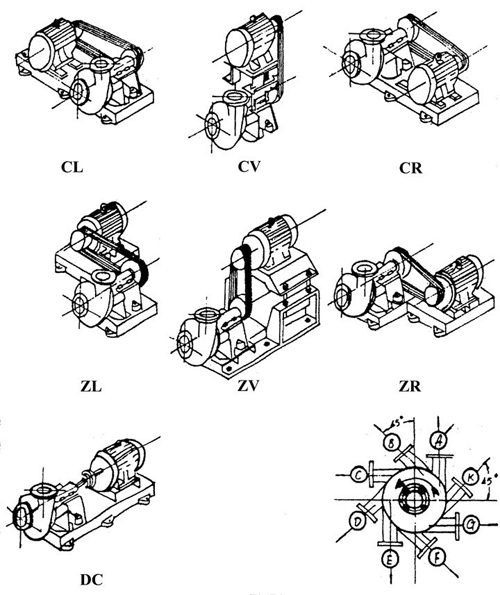
7. Installation Type

(Please refer to the picture for details)
[Here should be a reference to an actual picture showing different installation types related to slurry pump selection]


How to Select the Right Slurry Pump for Your Application


8. Motor

After calculating the shaft power, a power surplus coefficient should be considered when selecting a motor to account for pump startup and capacity factors. The surplus coefficient ranges from 1.1 to 1.2. For large-power motors, a smaller coefficient is used, while for small-power motors, a larger coefficient is applied.

Wear Law of Slurry Pump Impellers

The wear mechanism of slurry pump impellers is a critical factor influencing pump performance and longevity, particularly in industries handling abrasive solid-liquid mixtures. Understanding the wear patterns requires analyzing the motion trajectory of solid particles within the impeller and their interaction with pump components.


Particle Dynamics and Wear Distribution

When slurry enters the impeller, solid particles undergo a directional shift from axial to radial motion due to centrifugal force. This forces most particles toward the impeller periphery, creating a non-uniform concentration distribution. Consequently, the rear cover plate experiences significantly more wear than the front cover plate, with severe wear concentrated at the intersection of the blade inlet edge and rear cover.


Impact of Particle Size on Wear

1. Small Solid Particles

  • Motion Characteristics: Small particles exhibit pre-rotation similar to the liquid flow, aligning with the impeller’s direction. Their low inertia and minimal centrifugal force cause them to adhere to the blade’s working surface throughout the flow channel.

  • Wear Pattern: These particles primarily erode the blade outlet edge and working surface due to prolonged friction. Wear at the inlet edge is less pronounced, but the trailing edge suffers cumulative abrasion as particles exit with low radial velocity.


2. Large Solid Particles

  • Motion Characteristics: Large particles, with higher inertia, resist pre-rotation and collide with the blade inlet edge at varying angles. Their strong centrifugal force drives them away from the blade’s working surface, creating a trajectory mismatch with the blade curvature.

  • Wear Pattern: These particles cause impact wear at the inlet edge and generate intense abrasion along the flow channel. Some particles are redirected to the blade’s backside, leading to secondary wear. At the outlet, their high radial velocity and flow angle exacerbate erosion, particularly on the trailing edge.


Key Observations

  • Wear Progression: Wear typically progresses from the leading edge to the trailing edge, with the latter experiencing the most severe damage.

  • Surface Comparison: The working surface of the blade wears more intensely than the backside due to direct particle friction and centrifugal force-driven collisions.

  • Design Implications: While slurry pump models vary, the fundamental wear mechanisms remain consistent. Optimal impeller design, material selection, and operational parameters (e.g., flow rate, particle size distribution) are crucial to mitigating wear and extending service life.


The wear law of slurry pump impellers underscores the interplay between particle dynamics, centrifugal forces, and impeller geometry. By understanding these principles, engineers can enhance pump durability through targeted design improvements, such as reinforced blade edges, wear-resistant coatings, or optimized flow paths. This knowledge is vital for industries reliant on slurry pumps, ensuring efficient operation and reduced maintenance costs in abrasive environments.

What factors affect the efficiency of slurry pumps?

1. Pump Selection

Match with Slurry Characteristics:

  • The properties of the slurry being transported, such as its density, abrasiveness, and corrosiveness, must be carefully considered. For example, if the slurry is highly abrasive, a pump with wear-resistant materials like high-chrome alloy impellers and casings should be selected. If the wrong material is chosen, the pump will wear out quickly, leading to inefficiencies.

  • The flow rate and head requirements of the system need to be accurately determined. If the selected pump has a lower flow rate or head than required, it will struggle to meet the demand, reducing overall efficiency. For instance, in a mining operation where a large volume of slurry needs to be pumped over a certain height, choosing a pump with insufficient capacity will result in a sub-optimal performance.


2. Installation Quality

Alignment and Mounting:

  • Precise alignment of the pump shaft with the motor shaft is crucial. Any misalignment can cause uneven stress on the bearings, leading to increased friction and vibration. This vibration not only reduces the pump's efficiency but also shortens the lifespan of the components. For example, if the pump is installed in a hurry and the shafts are not properly aligned, the pump may consume more energy to operate and deliver less slurry.

  • Secure and proper mounting of the pump is also essential. If the pump is not firmly mounted, it can move during operation, which can disrupt the flow of the slurry and cause inefficiencies. A loose-mounted pump may also cause excessive noise and vibration, indicating that energy is being wasted.


3. Operating Conditions

Slurry Concentration:

  • As the concentration of the slurry increases, its viscosity generally increases, and the resistance to flow also rises. This makes it more difficult for the pump to move the slurry, reducing the flow rate and overall efficiency. In a coal-washing plant, if the slurry has a high concentration of fine coal particles, the pump may have to work harder to push the slurry through the pipeline, resulting in lower efficiency.

  • Temperature:

  • High-temperature slurries can have a significant impact on the pump's performance. When the temperature of the slurry is high, the vapor pressure of the liquid in the slurry may increase, which can lead to cavitation. Cavitation occurs when vapor bubbles form and collapse in the pump, causing damage to the impeller and reducing the pump's efficiency. For example, in a chemical plant where hot, corrosive slurries are being pumped, the high temperature can exacerbate the problem of cavitation, leading to reduced performance.

Viscosity:

  • A highly viscous slurry requires more energy to be pumped. The pump has to overcome the greater internal resistance of the viscous fluid, which can slow down the flow rate and decrease the efficiency. In a food-processing industry where thick, viscous slurries are common, such as in the production of tomato puree, the pump needs to be carefully selected and operated to handle the high viscosity without sacrificing too much efficiency.


4. Wear Conditions

Internal Component Wear:

  • The impeller, which is a key component in a slurry pump, is particularly susceptible to wear. As the slurry passes through the pump, the abrasive particles in the slurry can gradually erode the surface of the impeller. This wear can change the shape of the impeller, reducing its ability to transfer energy to the slurry effectively. Over time, the pump will experience a decrease in flow rate and head, resulting in lower efficiency. In a sand-mining operation, the constant abrasion of the impeller by sand - laden slurry can cause significant wear and efficiency losses.

Seal Wear:

  • Worn-out seals can lead to leakage of the slurry. When there is leakage, the pump has to work harder to maintain the required flow rate and pressure, wasting energy and reducing efficiency. For example, in a wastewater treatment plant, if the seals of the slurry pump are not regularly maintained and start to leak, the pump will consume more power to compensate for the lost flow, decreasing its overall efficiency.


5. Maintenance

Regular Inspections:

  • Regularly checking the internal parts of the pump, such as the impeller, bearings, and seals, is essential. By detecting early signs of wear or damage, timely repairs or replacements can be made. For example, if a bearing shows signs of wear during an inspection, replacing it before it fails completely can prevent further damage to other components and maintain the pump's efficiency.

Component Replacement:

  • When parts are severely worn, replacing them with new, high-quality components is necessary. For instance, if the impeller is significantly eroded, installing a new impeller of the correct specification can restore the pump's performance and efficiency. Delaying component replacement can lead to more serious problems and a continuous decline in efficiency.

What is the slurry pump?

What is slurry?

Definition of slurry:

Slurry actually refers to a mixture of liquid and some solids that are insoluble in liquid. The type, size, shape and content of solids determine the physical properties and flow characteristics of slurry.


In engineering, the following main characteristic parameters are required to accurately describe a type of slurry. These parameters should also be mastered as accurately as possible before selecting and applying slurry pumps:

  • Type of solids True specific gravity of solids----S

  • Particle size distribution of solids----such as median particle size d50

  • Solid content----weight concentration Cw; volume concentration Cv

  • Type of liquid Specific gravity of liquid----sw Viscosity of slurry

  • Temperature of slurry Acidity and alkalinity of slurry----PH value and what kind of acid or alkali


Slurry characteristics

In engineering applications, slurries are usually divided into two categories according to the different characteristics of the slurry: homogeneous slurry and inhomogeneous slurry.

Homogeneous slurry refers to those slurries in which the particle size of the solid matter is very fine, so that these solid matter will not settle even in a static state. This type of slurry has very low abrasiveness, but it will show a large change in macroscopic viscosity with the change of concentration, so it should be very small in the selection

The solid particles in the inhomogeneous slurry are relatively coarse, and they will precipitate in a static state. The coarser particles increase the abrasiveness of the slurry. Usually, most of the slurries we encounter are inhomogeneous slurries.


What is the slurry pump?

A slurry pump is a pump used to transport solid-liquid mixtures. There are many types of solid-liquid pumps: centrifugal, mixed flow, screw, etc.

The slurry pump we are talking about is actually a centrifugal solid-liquid pump. Slurry pumps are suitable for transporting solid-liquid mixtures with strong abrasion and containing hard solid particles. For example: ore slurry, ash, cement slurry, gravel, etc. Classification of slurry pumps 1. According to the layout: Horizontal slurry pump, submersible slurry pump, submersible slurry pump. 2. According to the application: Mortar pump, mud pump, gravel pump, dredging pump, foam pump, etc..

What pumps are used in coal washing plants?

Pumps Employed in Coal Washing Plants

Coal washing plants deal with a diverse range of media under complex working conditions, necessitating the use of various pumps. The main types include slurry pumps, coal sludge pumps, clean water pumps, and mortar pumps. Let's explore the primary application scenarios and advantages of each pump type:


Slurry Pump

Application Scenario

In the coal sludge water system of a coal washing plant, slurry pumps are indispensable for transporting liquids laden with a large quantity of coal slag and coal sludge particles. For instance, they are used to convey high-concentration coal sludge from the bottom of the concentration tank to the filter press. In the heavy-medium coal preparation process, they transport the suspension containing magnetite powder. These pumps ensure the stable transfer of coal sludge and related media across different processing stages, making them key equipment in the coal washing plant.


Advantages

  • The flow-through parts are crafted from highly wear-resistant materials like high-chromium alloy cast iron and polyurethane. This effectively guards against the erosion and wear caused by coal slag and coal slime particles, thus extending the equipment's lifespan.

  • They offer a wide range of flow rates and heads. This allows for flexible selection based on the coal washing plant's scale, the conveyance distance, and height requirements, catering to diverse working conditions.

  • The impeller and pump body are designed rationally, featuring a wide flow channel. As a result, they are less likely to be blocked by large particles, ensuring a smooth transportation process.


Coal Sludge Pump

Application Scenario

Specifically engineered for transporting the coal slime generated during the coal washing process, coal sludge pumps play a crucial role in the coal slime recovery process. For example, they convey coal slime from the sedimentation tank to the coal slime dryer for drying. In the coal slime flotation process, they transport the pre-flotation coal slime slurry to the flotation machine.


Advantages

  • They exhibit strong adaptability to coal slime, capable of handling high-concentration and high-viscosity coal slime.

  • Generally, they possess good self-priming capabilities, effectively preventing cavitation and guaranteeing the pump's stable operation.

  • Some coal sludge pumps are equipped with stirring devices. These devices prevent coal slime from settling, maintaining the continuity and stability of the transportation process.


Clean Water Pump

Application Scenario

Clean water pumps are mainly tasked with transporting clean water or liquids similar to clean water within the coal washing plant. In the circulating water system, they supply circulating water to equipment such as jigs and heavy-medium cyclones, ensuring the normal operation of these devices. They are also extensively used for washing workshop floors and in fire-water supply systems.


Advantages

  • They have a relatively simple structure, enabling high-efficiency operation and efficiently accomplishing the clean water delivery task.

  • Their sealing performance is excellent, effectively preventing leakage. This ensures the rational utilization of water resources and avoids any negative impact on the coal washing plant's environment.

  • Depending on different usage scenarios, they are available in a variety of flow and head specifications, meeting diverse requirements.


Mortar Pump

Application Scenario

Mortar pumps are suitable for transporting slurry that contains mixed materials such as sand particles and coal slime. In sand-washing operations, they transport the mortar with sand particles and a small amount of coal slime to the sand-washing machine for separation. In the tailings treatment system, they transfer the tailings mortar to the tailings pond.


Advantages

  • They have good wear resistance, capable of withstanding the abrasive action of sand particles.

  • They offer a certain head and flow rate to meet transportation demands.

  • During the design process, the characteristics of the mixed materials are considered. This helps prevent sand particles and coal slime from depositing in the pump, ensuring smooth transportation.

When the flow rate of slurry delivered by the slurry pump fluctuates greatly, what adjustment measures should be taken?

When the slurry flow rate delivered by the slurry pump experiences significant fluctuations, what scientific and effective adjustment measures can be implemented to guarantee the safe and stable operation of the entire process system?


Firstly, there are numerous factors contributing to the excessive fluctuation of the slurry flow. Process parameter alterations are one aspect. These include changes in material concentration, viscosity, and other physical properties. Additionally, the resistance characteristics of the pipeline system can change. This might involve valve opening adjustments, pipeline blockages, or leaks. The equipment's own performance can also attenuate. For instance, there could be mechanical failures such as impeller wear, seal failure, or poor bearing lubrication. Moreover, external environmental factors like grid voltage fluctuations that cause unstable motor speeds need to be taken into account.


For flow fluctuations resulting from different causes, differentiated control strategies should be employed. When the flow exceeds the upper limit of the design range, the initial step is to precisely adjust the opening of the outlet valve via the electric actuator for throttling control. During this process, it is essential to monitor key operating parameters in real-time, such as motor current, bearing temperature, and vibration frequency. This helps prevent mechanical failures due to overload operation. Simultaneously, the pump body sealing system should be inspected for integrity to avoid medium leakage caused by overpressure. If the flow rate remains continuously high and exceeds the equipment's tolerance limit, consider appropriately reducing the motor speed or adjusting the impeller diameter to fundamentally regulate the flow range.


If the flow rate is lower than the rated value and has notably affected the system efficiency, a comprehensive troubleshooting process is necessary. First, check whether the suction pipeline is blocked. This includes verifying if the filter requires cleaning and if there is sediment accumulation at the pipeline elbows. Secondly, pay close attention to whether cavitation occurs. This can be determined by observing the pump body vibration, noise changes, and outlet pressure fluctuations. For cavitation issues, measures such as increasing the suction liquid level, optimizing the pipeline design, or installing an inducer can be adopted. If the impeller is severely worn due to long-term operation, it is crucial to promptly replace the impeller with a matching specification and recalibrate the pump's performance curve to ensure the working point lies within the high-efficiency zone.


Furthermore, it is advisable to install an intelligent flow control system in key process links to achieve precise control using variable-frequency speed regulation technology. This system should possess real-time monitoring, data analysis, and automatic adjustment capabilities. It should be able to dynamically adjust the pump's operating parameters according to production requirements. On the premise of ensuring safe production, energy consumption can be minimized by optimizing the combination of motor speed and valve opening. Additionally, the system should have a fault-warning function. When abnormal fluctuations are detected, it can promptly issue an alarm and activate the emergency plan.


For special working conditions with long-term flow fluctuations, more intricate engineering transformation solutions can be contemplated. For example, the dual-pump parallel operation mode can be adopted, and the intelligent control system can achieve automatic switching and flow distribution between the main and standby pumps, thereby enhancing the system's stability and reliability. Or buffer tanks and other energy-storage devices can be configured. Their volumetric effects can be utilized to smooth out flow fluctuations and reduce the impact load on the pump body. In extreme cases, complex adjustment solutions such as multi-stage pumps in series or a combination of variable-frequency motors and hydraulic couplers can also be considered to fundamentally improve the stability and reliability of system operation.

Why does the slurry pump need circulating water?

Slurry pumps employ circulating water primarily to fulfill functions like cooling, lubrication, and cleaning. These functions are essential for ensuring the normal operation of the slurry pump and prolonging its service life. The detailed reasons are as follows:


Cooling Function

Lowering the Pump Body Temperature: During the operation of a slurry pump, the impeller rotates at a high speed, creating intense friction with the slurry. Additionally, the motor drive also generates a certain amount of heat. If this heat is not dissipated promptly, it will cause the temperature of the pump body to increase. Excessive temperature can degrade the performance of pump components. For example, it can lead to the aging and deformation of seals, reducing their sealing effectiveness, resulting in slurry leakage. Moreover, it can affect the lubrication performance of bearings and increase wear. Circulating water flows over the surfaces of components such as the pump casing and impeller. It can absorb and carry away heat, thus maintaining the pump body temperature within a reasonable range and ensuring the normal operation of the pump.


Preventing Excessive Medium Temperature: For certain special slurry media, particularly in some chemical production processes, the slurry may be highly temperature - sensitive. If the slurry temperature is too high, chemical reactions, crystallization, or precipitation may occur. These phenomena can affect the properties of the slurry and the conveyance effect. Circulating water can indirectly cool the slurry, preventing its temperature from rising too high, maintaining the stability of the slurry, and ensuring the smooth progress of the transportation process.


Lubrication

Reducing Component Wear: Components of the slurry pump such as the impeller, shaft, and bearings require effective lubrication during operation to minimize friction and wear. Circulating water can form a thin water film on the surfaces of these components, which serves a lubricating function, similar to applying lubricant between components. This water film can decrease the friction coefficient between components, reducing direct contact and wear, and thereby extending the service life of the components. Notably, for some slurry pumps equipped with water - lubricated bearings, the lubricating effect of circulating water is even more crucial as it directly impacts the operating stability and lifespan of the bearings.


Enhancing Sealing Performance: The sealing components of the slurry pump, like mechanical seals, need proper lubrication and cooling to ensure their sealing effectiveness. Circulating water can provide lubrication for the sealing components, reducing friction between the sealing surfaces and preventing the sealing surfaces from being damaged due to overheating. This, in turn, improves the sealing performance and prevents slurry leakage.


Cleaning Function

Preventing Impurity Accumulation: Slurry typically contains various solid impurities and particles. If these impurities accumulate within the pump, they will affect the performance and efficiency of the pump. In severe cases, they may even block the flow channel, rendering the pump inoperable. When circulating water flows through the pump, it can wash away impurities adhering to the surfaces of the pump body and impeller, keeping the flow channel clear and allowing the slurry to pass through the pump body more smoothly.


Prolonging the Filter Life: A filter is usually installed at the inlet of the slurry pump to prevent large - sized impurity particles from entering the pump body. Circulating water can flush the filter, reducing the accumulation of impurities on the filter surface and the degree of filter blockage. As a result, it extends the service life of the filter, reduces the frequency of frequent cleaning or replacement due to filter blockage, and improves the operating efficiency and reliability of the equipment.

What info do I need to give to get a quotation?

Just let us know the pump’s capacity, head, what medium it’ll handle, the medium temperature, pump material, and how many you need. If you have your current pump model handy, send it over—we’ll quote based on that. If not, we can recommend some good options for you.

Can you manufacture pumps under our brand name?

Yes. We have 39 years of dedicated OEM service experience.


Could we come to your factory for a visit?

Sure! You’re always welcome to check out our factory.

Is there any after-sales support?

Yes, we can send our engineers to your site to handle assembly or maintenance work.


How do you ensure product quality?

We implement multi-layer quality control measures: 1) Each pump undergoes a comprehensive test prior to delivery; 2) Third-party inspections (e.g., SGS) are available upon request; 3) Rigorous material inspection and performance testing are carried out before shipment. We guarantee a full refund if the pump fails to meet quality standards due to our faults.

Do you provide after-sales service?

Yes. We can dispatch our professional engineers to your application site for on-site assembly and maintenance.


Is there a product warranty?

We offer a 12-month warranty for the entire pump unit.


Do you accept custom-specification orders?

Please provide detailed specifications first, or detailed drawing or parts code to check.and we will assess and proceed accordingly.


What’s the minimum order I need for special specification pumps?

It depends on how complex your custom specs are. Usually, we can do 1 unit for standard customizations, but for more complex changes, we might need a higher MOQ. Just tell us what you need, and we’ll let you know the exact number.

How long does it take to deliver special specification pumps?

It depends on how complex your custom needs are. For simple changes, it’s usually 2–4 weeks; for more complex redesigns, it might take 4–8 weeks. Just send us your detailed specs, and we’ll give you an accurate delivery time.


Do you supply test samples?

Yes. Standard/custom samples available. Sample fees are refundable upon bulk order. Contact us for details.

Is there a sample fee?

Yes, but sample fees are 100% refundable upon placing a qualifying bulk order.


Do you provide customs clearance support?

Yes. We arrange professional customs clearance agencies for you.


Do you offer a pump quotation template?

Yes. Standard template available—customizable upon request.


What’s your MOQ and payment terms?

MOQ 1 set—trial orders welcome! Payment: T/T, L/C, Western Union, PayPal.


What are the power options for slurry pumps?

We offer two power types—electric motor or diesel engine—as per customer requirements. For electric motor configurations, kindly confirm your local industrial voltage, hertz, and phase.

What is the lead time?

Generally, 7 working days for slurry pumps and 15 working days for water pumps.

Do you offer OEM/ODM services for pumps?

Yes. We provide full OEM/ODM services, including custom branding, product design optimization, and packaging customization to meet your market needs.

What materials are your pumps available in?

Common materials include cast iron, stainless steel, high-chromium alloy, and rubber-lined—selected based on the conveying medium (e.g., abrasive slurry, corrosive chemicals).

Do you supply OEM pump parts?

Yes! Send us your detailed drawings—we have different material options.

To Know First Pump More
Address
No. 9 Beihe Street, Xingtang Economic Development Zone, Shijiazhuang City, Hebei Province, China.
We use cookies to offer you a better browsing experience, analyze site traffic and personalize content. Part of the tracking is necessary to ensure SEO effectiveness,
By using this site, you agree to our use of cookies. Visit our cookie policy to learn more.
Reject Accept