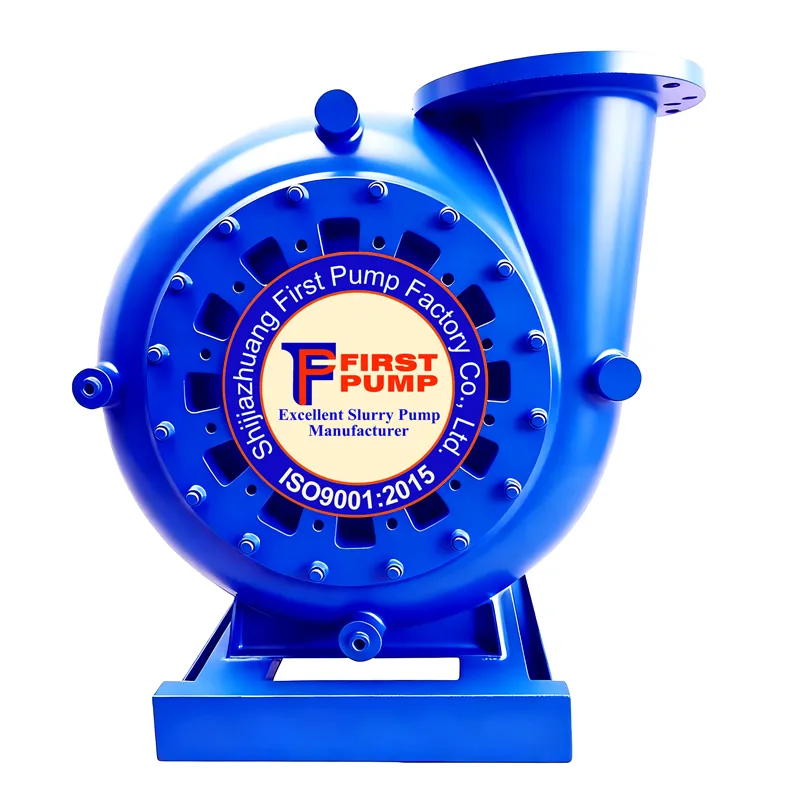
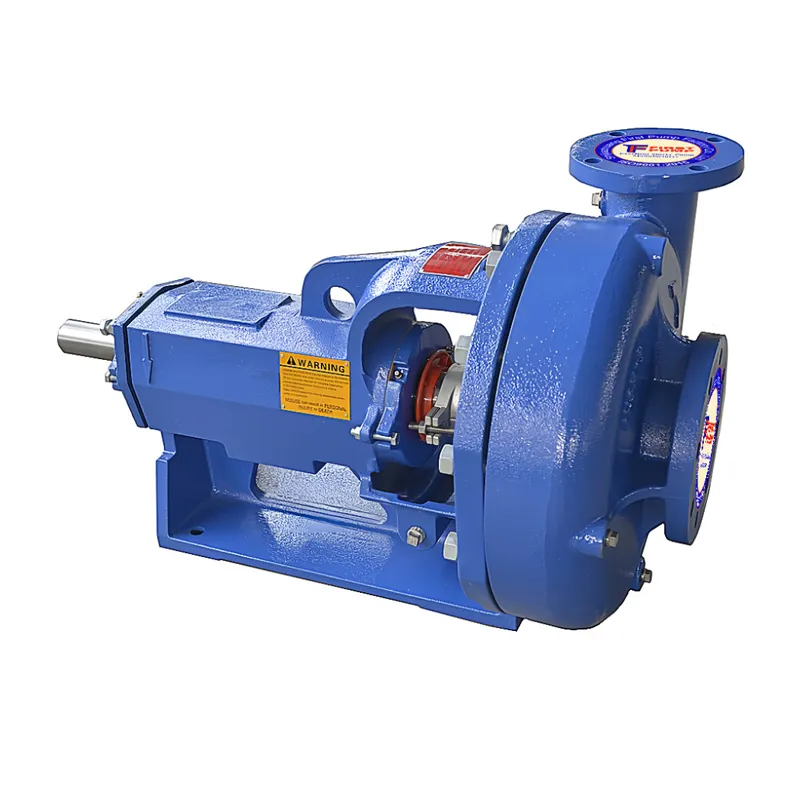
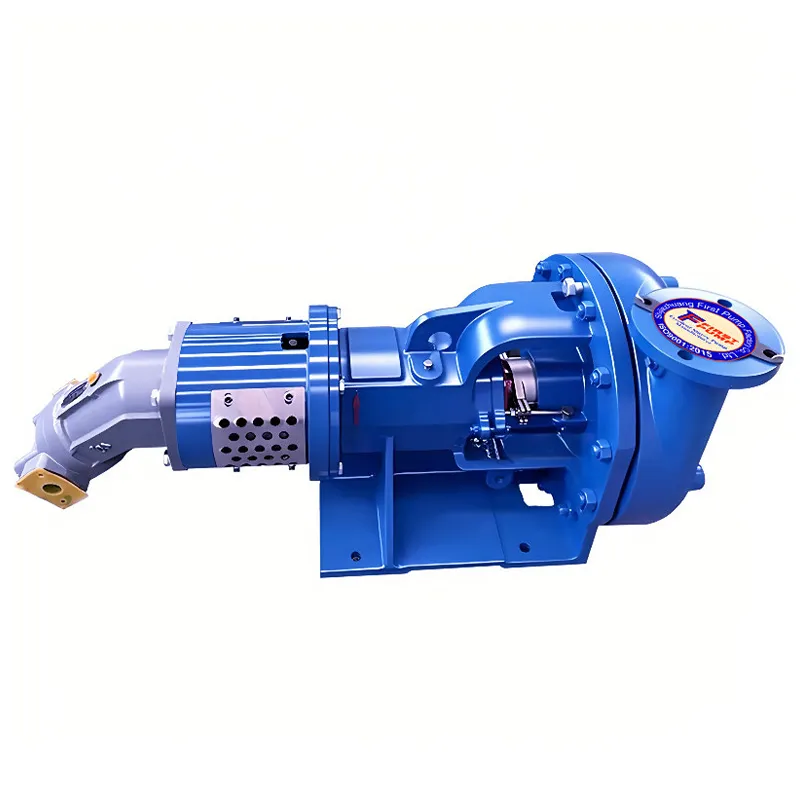
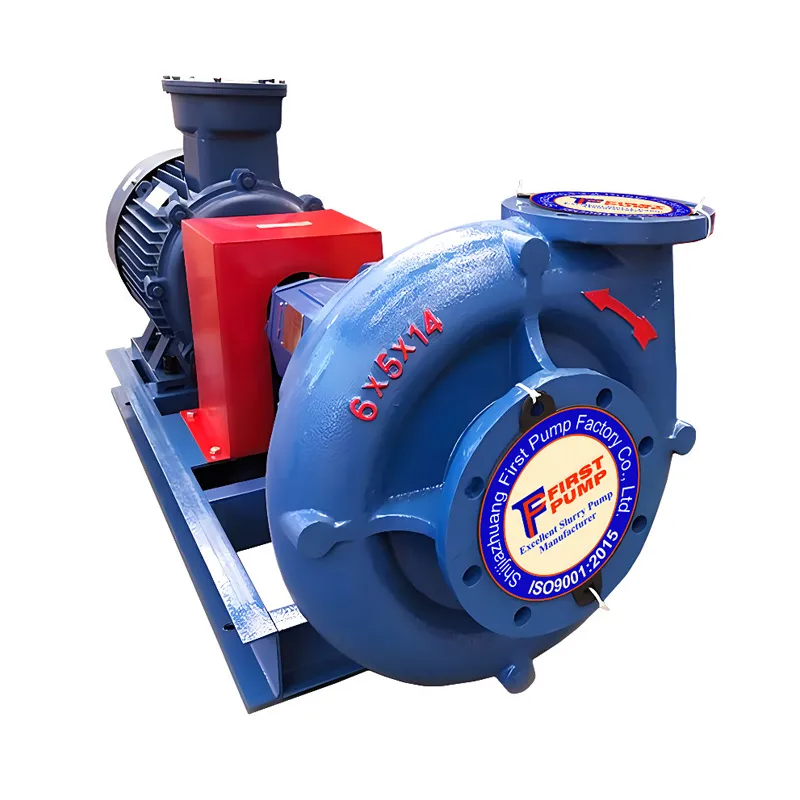
First Pump supplies oilfield centrifugal pumps for drilling fluid transfer, solids-control charging, mud mixing, cementing support and frac blender discharge applications. Pump selection is based on the required flow and total dynamic head, fluid density, solids concentration and particle size, operating temperature, material compatibility, seal arrangement, drive method and available NPSH.
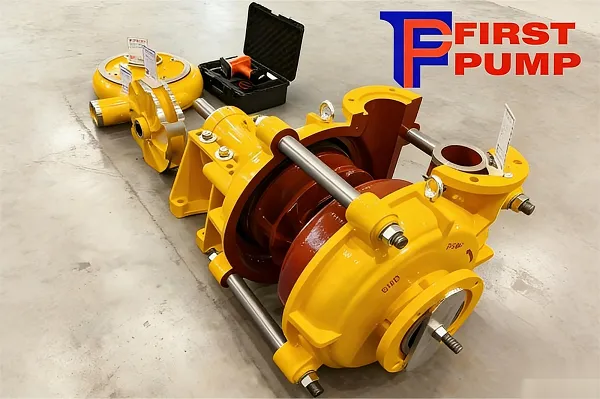
Our range includes horizontal, compact and vertical centrifugal pump configurations for oilfield service. For model selection, review our oilfield centrifugal pump models or submit your operating conditions for a pump recommendation.
Important distinction: Centrifugal pumps are typically used for high-flow transfer, mixing and equipment-charging duties. They are not substitutes for the high-pressure triplex mud pumps or frac pumps used for downhole pumping. Final selection must be based on the actual duty point and fluid properties.
Where Are Oilfield Centrifugal Pumps Used?
Oilfield pumps perform different duties across drilling, completion, cementing and hydraulic fracturing systems. Matching the pump to its actual position in the process helps prevent low flow, cavitation, accelerated wear and seal failure.
| Oilfield Process | Pump Function | Main Selection Factors |
|---|
| Drilling fluid transfer | Move drilling fluid between tanks, pits and process equipment | Flow, head, fluid density and solids concentration |
| Solids-control charging | Feed desanders, desilters, mud cleaners and centrifuges | Stable flow, NPSH, wear resistance and operating speed |
| Mud mixing and circulation | Circulate and blend drilling or completion fluids | Impeller selection, flow stability and material compatibility |
| Cementing support | Support mixing and low-pressure fluid-transfer operations | Installation space, drive method and required duty point |
| Frac blender discharge | Transfer high-volume, proppant-containing fluid from the blender | Flow, abrasion, solids loading and suction conditions |
| Pit, sump and drainage service | Remove contaminated water and settled solids | Maximum particle size, clogging risk and installation depth |
Oilfield Centrifugal Pump Models and Applications
The following model families cover different oilfield duties. The table is intended as an initial application guide rather than a substitute for hydraulic selection. Required performance must be confirmed against the selected pump curve.
| Pump Series | Typical Oilfield Duty | Selection Advantage |
|---|
| Mission Magnum I centrifugal pump | Drilling fluid transfer, mixing and solids-control equipment charging | Continuous-duty configuration with multiple size and material options |
| Mission Sandmaster pump | Blending, pump charging, cementing support and compact equipment packages | Shorter layout for installations where space and prime-mover options are limited |
| Mission 2500 Supreme pump | General drilling fluid transfer, mud mixing and charging service | Multiple pump sizes and drive arrangements for continuous service |
| Magnum XP frac blender discharge pump | High-volume transfer of abrasive slurry and proppant-containing fluid | Large-flow configuration for blender discharge and demanding transfer duties |
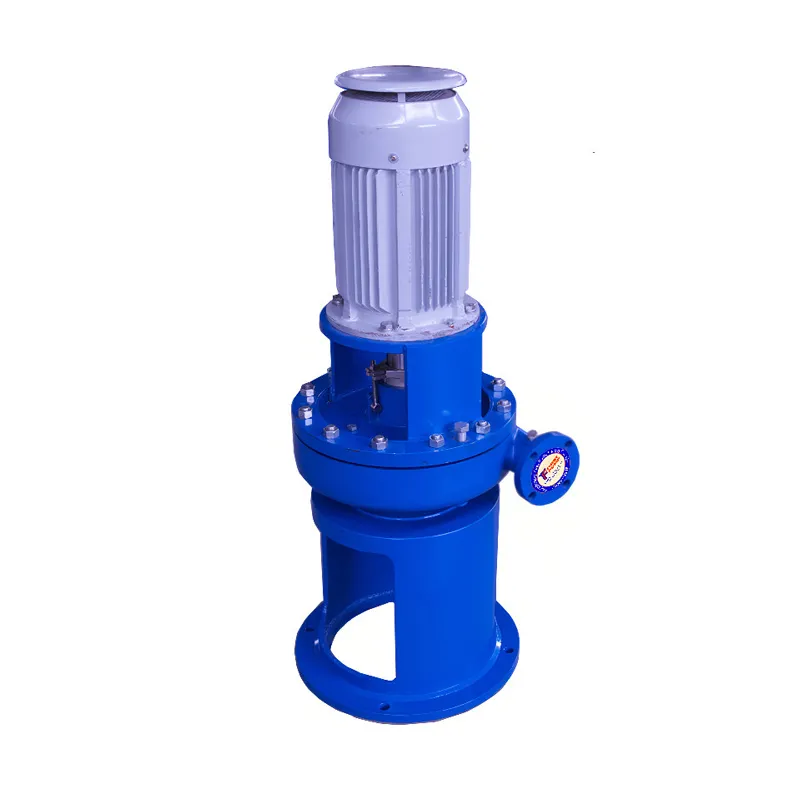
| Vertical Mission centrifugal pump | Tank, pit and restricted-floor-space installations | Vertical arrangement reduces the required installation footprint |
Brand and model references are provided to help purchasers identify the required configuration or replacement compatibility. Pump dimensions, materials, performance and interchangeability must be confirmed before ordering. For additional application data, review our frac blender pump technical information.
How to Select an Oilfield Pump
Reliable oilfield pump selection starts with the system duty rather than the pump model name. Provide the following operating data so the hydraulic curve, material and sealing arrangement can be checked together.
Required capacity: Normal, minimum and maximum flow rate.
Total dynamic head: Static lift, pressure requirements and piping losses.
Fluid density: Specific gravity directly affects absorbed power.
Solids data: Concentration, maximum particle size, hardness and shape.
Chemical properties: pH, chlorides, additives and other corrosive components.
Operating temperature: Normal and maximum liquid temperature.
Suction conditions: Tank level, suction pipe arrangement and available NPSH.
Drive method: Electric motor, diesel engine or hydraulic drive.
Operating schedule: Continuous, intermittent or emergency service.
Installation limits: Available footprint, orientation, altitude and ambient conditions.
Avoid selecting by pipe diameter alone. An oversized pump can operate far from its best efficiency point, increasing vibration, recirculation and wear. An undersized pump may fail to deliver the required flow or head. The selected duty point should be checked against the pump curve and available NPSH.
Materials, Seals and Drive Options
Drilling and completion fluids may combine abrasion, corrosion, entrained air and variable solids loading. Available construction depends on the pump series and duty conditions, so material and seal selection should be confirmed during engineering review.
Wetted-Part Materials
Options may include wear-resistant iron, high-chrome alloy, ductile iron, stainless steel or other materials selected for the fluid chemistry and solids.
Shaft Sealing
Mechanical seals, gland packing or expeller-type arrangements may be considered according to solids, pressure, speed and allowable leakage.
Drive Configuration
Electric motors, diesel-engine packages, hydraulic drives and variable-frequency control can be evaluated where supported by the selected configuration.
Common Oilfield Pump Problems and Selection Responses
| Operating Problem | What to Check | Selection Response |
|---|
| Rapid impeller or casing wear | Solids hardness, concentration, particle size and operating speed | Review material, speed and hydraulic operating point |
| Cavitation, noise or unstable flow | Suction lift, pipe losses, tank level, entrained air and NPSH | Improve suction conditions and select a suitable pump speed |
| Frequent seal leakage | Seal faces, flush arrangement, shaft movement and dry running | Match the seal arrangement to the fluid and operating conditions |
| Motor overload | Specific gravity, flow, impeller diameter and actual operating point | Recalculate absorbed power with the actual fluid density |
Information Required for an Oilfield Pump Quotation
To receive a more accurate pump recommendation, include as much of the following information as possible with your inquiry:
Required flow rate and total head
Fluid name, specific gravity and temperature
Solids concentration and maximum particle size
pH, chlorides or other corrosive components
Preferred material and sealing arrangement, if specified
Electric, diesel or hydraulic drive requirement
Installation drawing, suction conditions and available space
Required quantity, destination country and applicable inspection requirements
Send Your Oilfield Pump Duty Conditions
Use the quotation form on this page to submit your flow, head, fluid and installation data. Our team will review the operating conditions before recommending a pump configuration.
Frequently Asked Questions About Oilfield Pumps
What is the difference between an oilfield centrifugal pump and a mud pump?
An oilfield centrifugal pump generally provides high flow at relatively low or moderate head for transfer, mixing and equipment charging. A high-pressure drilling mud pump is normally a positive-displacement reciprocating pump used to circulate drilling fluid downhole. The two pump types perform different duties and should not be treated as interchangeable.
How do I select a centrifugal pump for drilling fluid?
Start with the required flow and total head, then provide fluid density, solids concentration, maximum particle size, temperature, suction conditions and operating schedule. These factors determine the hydraulic size, absorbed power, material, seal and drive arrangement.
Can an oilfield centrifugal pump handle proppant-containing fluid?
Some heavy-duty centrifugal pump configurations are intended for abrasive, proppant-containing mixtures, particularly in blender discharge service. Suitability depends on solids concentration, particle size, flow, material, speed and expected service life. The complete duty data should be reviewed before selection.
Which drive options are available for oilfield pumps?
Depending on the pump configuration, drive options may include electric motors, diesel engines or hydraulic motors. Variable-frequency control can also be evaluated for applications requiring adjustable flow, provided the permitted operating range and minimum speed are respected.
Can First Pump help select replacement or compatible pump configurations?
Yes. Please provide the existing model, nameplate information, duty point, fluid data, material requirement and dimensional drawing where available. Compatibility should be confirmed from dimensions and operating data rather than from the model name alone.
 EN
EN